

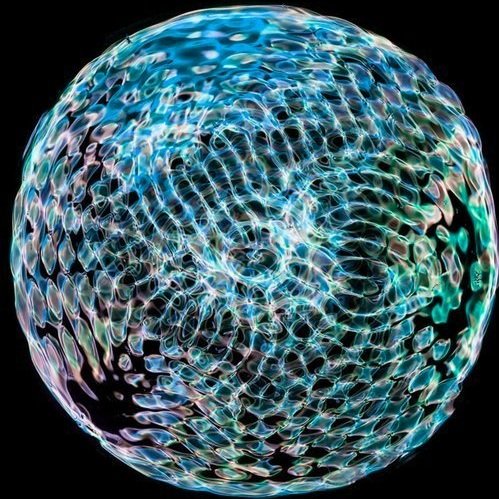

From ancient Greek: κῦμα, meaning "wave" is what inspired scientist Hans Jenny to use the term Cymatics, to describe a subset of modal vibrational phenomena - the study of visible sound and vibration in the 1960s. Jenny (1904-1972) was a physician and natural scientist. In 'Cymatics: The Study of Wave Phenomena' he concluded about what he had observed, "This is not an unregulated chaos; it is a dynamic but ordered pattern."
And so, Cymatics refers to the study of the periodical effects that sound and vibrations exercise on matter. Cymatics can be described as a field of research studying the observations and the measurements of the vibrational sound frequencies interacting with all kinds of matter…
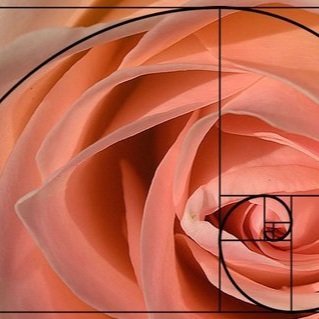
The first written record of the Fibonacci's Sequence comes from around 200BC in the Sanskrit tradition of prosody; basically a study of phonetics. In the West, the Fibonacci sequence first appears in the book Liber Abaci by Leonardo of Pisa, written in 1202. Leonardo was known as Fibonacci.
Fibonacci's equation was based on an idealized pattern of rabbit reproduction, which consisted of mating pairs of rabbits reproducing at optimum efficiency. Because rabbits breed every month, the sequence looks like this…
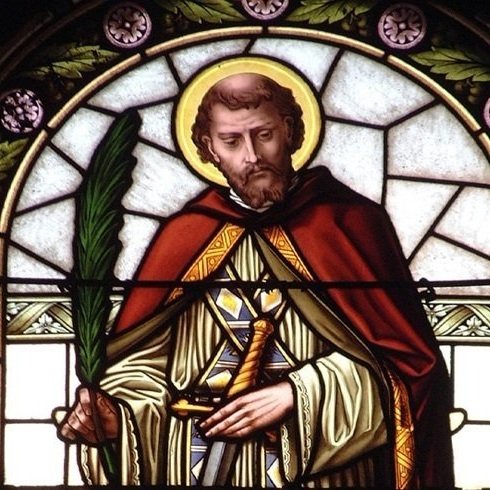
The history of Valentine's Day is really obscure. Its roots are in an ancient Roman festival called Lupercalia, a fertility celebration commemorated annually on February 15, and most scholars believe that St. Valentine of the Catholic Church was a priest who was executed/ martyred for performing secret marriage ceremonies. Before he was executed, he allegedly sent her a letter to his own true love signed..."Your Valentine."
The Heart
The heart symbol we use to express our affections today can be traced back to Cro-Magnon hunters in Europe who used the symbol in pictographs…
In my last post I discussed a common contemporary separation that exists between human and non-human worlds. A separation that I feel is at the core of our current ecological crisis. And at the heart of that severed relationship lays a misconception about our own divinity. Many of us were first introduced to nature as our dominion, something to cherish and protect. The story goes that God created the rest of nature as a gift for us, and that it is up to us to preserve and protect it from those that would attempt to misuse, master and destroy it. Nature however, is abundant, resilient and divine. The world’s most ancient people and today's most indigenous cultures did and do not locate God and divinity in a space above, or in a position unattainable to humankind. Past and present many peoples' relationship to God and Nature was and is one of kinship. In many places God is still an integrated reality experienced through intimate relations with the natural world, and perhaps the best way for us to enter into a more balanced relationship with nature and ecology is to collectively see ourselves as a part of it; recognize our divinity, and proceed to live in ways that allow us to participate in the effortless flow of energy that is so apparent in the rest of creation…
1,000 years ago the world was introduced to a unique and mystical compound known as poudre. At it’s invention there was no such thing as a gun…
Human and non human we are animals. We are not separate from the natural world, we are part of it. What remains in constant contention is the amount of connection or disconnection we feel and participate in. And so I sing a song to the hunter-gatherer in all of us, the wilderness available around every corner; the magic, the ritual and the fusion of human and non-human animals.
For 20,000 years humankind lived in a directly interconnected relationship with the rest of nature. In the 10,000 that follow we have attempted to dominate and manipulate nature as a commodity, something to be tamed and appropriated…